When strata councils and property managers compare landscaping companies, price is often the first filter.
But once you look past price, the real question becomes:
"Who is actually working on our property, and how well are they trained?"
At Urban Forest Landscaping, we believe consistent, professional results come from formal training, clear standards, and ongoing oversight, not luck or individual effort.
Why Training Matters in Strata Landscaping
Strata properties are complex environments. They involve shared spaces, safety risks, resident expectations, and long-term asset protection.
Without proper training, issues show up quickly:
- Inconsistent quality between visits
- Incorrect pruning or plant care
- Safety risks and liability exposure
- Higher complaint volume and management time
- Missed area's that build over time into big issues
Well-trained crews reduce these risks and create predictable, dependable outcomes. Our goal is simple: to make landscaping
the least stressful line items in your budget.
Entry into the RLT Program
Our landscapers are required to enter and graduate from the Registered Landscape Technician (RLT) program during their time with us.
The RLT program provides a structured foundation in:
- Horticulture and plant health
- Proper pruning techniques
- Soil, turf, and bed maintenance
- Safe and professional work practices
- Understanding landscapes as long-term systems
This ensures our crews are trained landscapers, not just equipment operators.
Required Safety and Technical Certifications
Beyond the RLT program, our team members hold and maintain certifications relevant to the work they perform.
These include, where applicable:
- Working From Heights certification
- Pesticide Applicator certification
- Equipment-specific safety training
- First aid and job-site safety education
Structured Onboarding for Strata Environments
No one is placed on a strata site without formal onboarding.
This includes training on:
- Professional conduct in shared residential environments
- Safe operation of equipment around residents and vehicles
- Awareness of site-specific risks and sensitivities
- Expectations for cleanliness, noise awareness, and site presentation
Clear Quality Standards Across All Properties
Our crews are trained to meet defined standards for:
- Lawn health and appearance
- Pruning quality and timing
- Hedge lines and sightlines
- Bed cleanliness and weed control
- Hardscape and common area care
Site-Specific Training and Documentation
Every strata property has unique characteristics.
We document and train crews on:
- Property layouts and access points
- High-visibility or high-traffic areas
- Seasonal problem zones
- Council or management preferences
Ongoing Quality Checks and Oversight
Our leadership team conducts regular site reviews to:
- Confirm work meets agreed standards
- Identify issues before they become complaints
- Coach and support crews
- Recommend proactive improvements
Safety as a Core Operating Standard
Our crews are expected to:
- Identify and mitigate hazards
- Follow proper equipment procedures
- Maintain safe, tidy worksites
- Protect residents, vehicles, and structures
Professional Conduct on Every Property
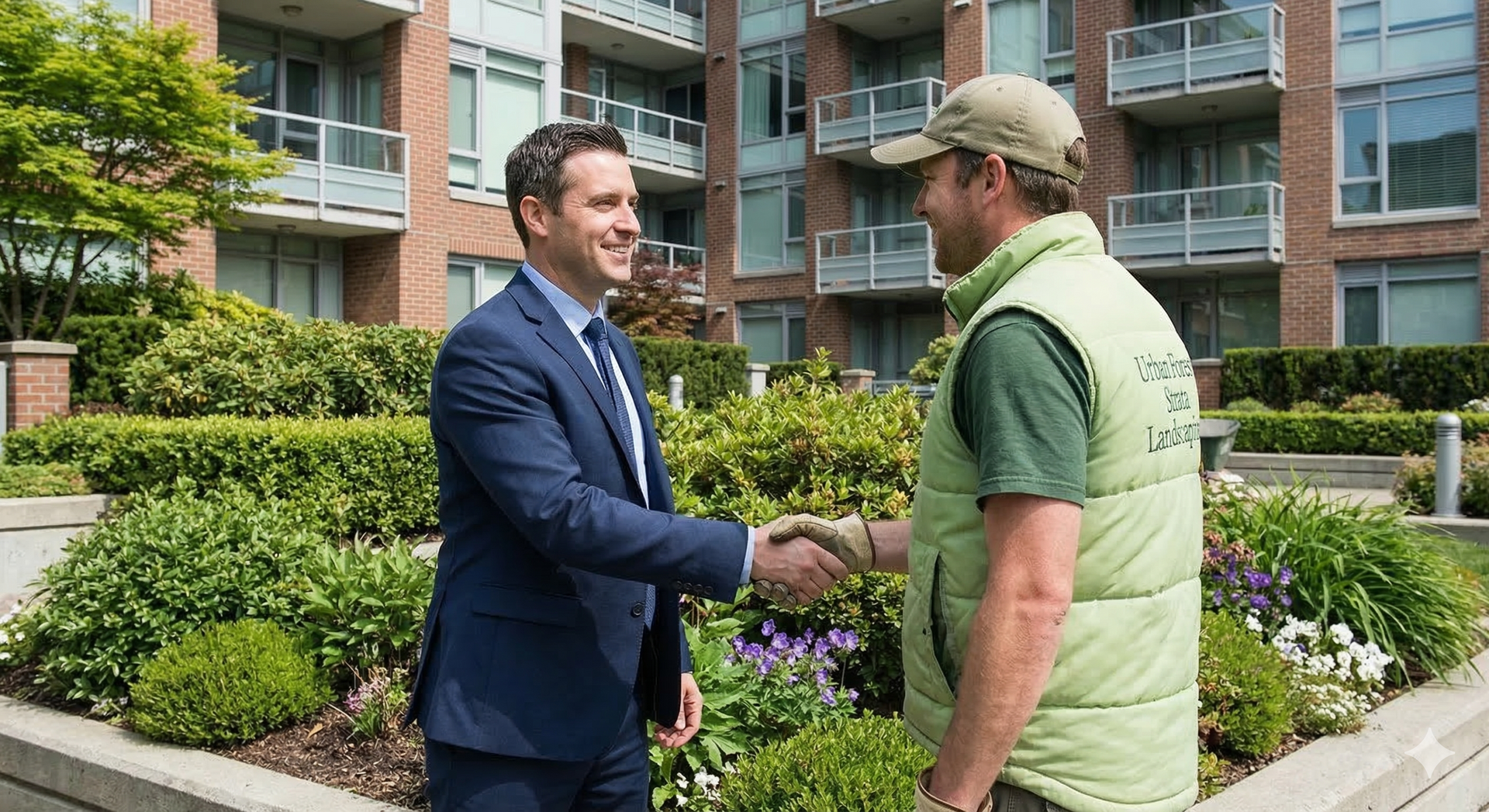
Our teams represent both Urban Forest Landscaping and your property.
That means:
- Professional appearance and behaviour
- Respectful interaction with residents
- Clear communication when required
- Leaving sites clean and orderly
Why Does This Matters When Choosing a Landscaping Partner?
By requiring formal training through the RLT program, maintaining relevant certifications, and reinforcing clear standards, we reduce risk and deliver predictable results for strata properties.
If you are comparing landscaping providers and want a partner who invests in training, systems, and accountability, we would be happy to talk.